Basic information about this product
Safety and hazard classification
 GHS07
GHS07
Important safety instructions and precautions
Signal Word: Warning
Hazardous Statement: H315-H319-H335
Precaution Statement: P261-P305 + P351 + P338
Detailed information about the product
Product Overview
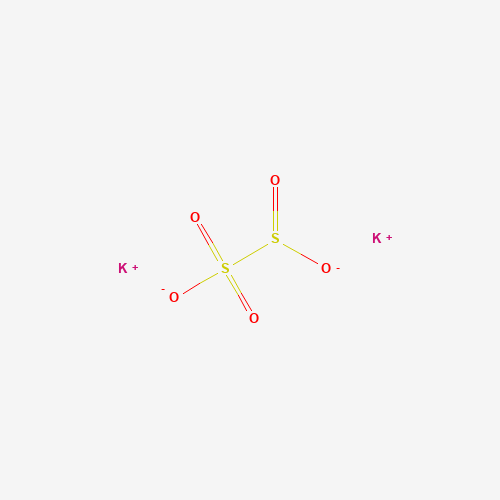
Potassium Metabisulphite 96% AR (CAS No. 16731-55-8) is a potassium sulphur(IV) reagent that generates bisulphite and related sulphite species upon dissolution. These species function as reducing agents and react readily with many oxidants, while atmospheric oxidation can gradually convert active S(IV) material toward sulphate. This redox responsiveness makes metabisulphite useful in conventional analytical reagent preparation and controlled reduction steps.
The AR grade is intended for wet-chemical reduction, quenching of compatible oxidants, preparation of sulphite/bisulphite reagents and analytical QC procedures.
Typical Applications
Common Synonyms
Storage Conditions
Keep tightly closed and minimise exposure to air and moisture so that reducing capacity is not progressively lost through sulphur(IV) oxidation or other compositional changes. Avoid oxidising contamination and prepare analytical solutions in accordance with the applicable method when fresh reducing capacity is critical.