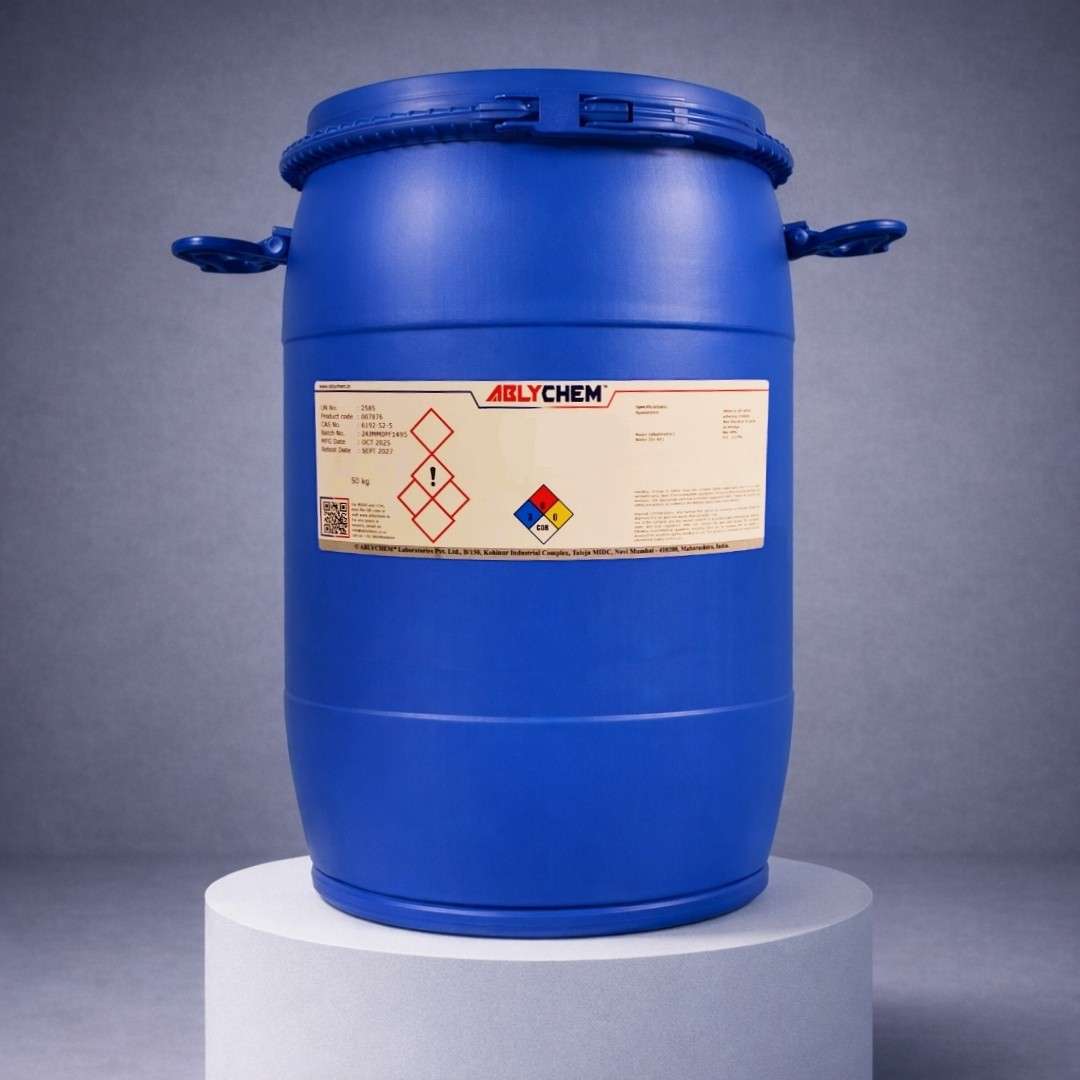
Basic information about this product
Safety and hazard classification
 NO GHS
Important safety instructions and precautions
Risk Statement: 32
Detailed information about the product
Product Overview
Potassium Ferricyanide 98% Extra Pure (CAS No. 13746-66-2) is the tripotassium salt of the hexacyanoferrate(III) complex anion, commonly known as ferricyanide. The octahedral iron–cyanide complex undergoes well-defined reversible electron-transfer chemistry with ferrocyanide and functions as a moderate one-electron oxidant in numerous aqueous and laboratory systems. Its coordination chemistry also gives characteristic reactions with suitable metal ions and reducing species.
The Extra Pure grade is suited to general redox chemistry, inorganic synthesis, coordination studies and laboratory procedures requiring ferricyanide as an oxidising or complex-ion reagent.
Typical Applications
Common Synonyms
Storage Conditions
Keep well closed and protected from prolonged light and contamination to preserve the ferricyanide oxidation state and reagent consistency. Avoid introducing reducing contaminants during dispensing, since partial reduction to ferrocyanide would alter redox performance.