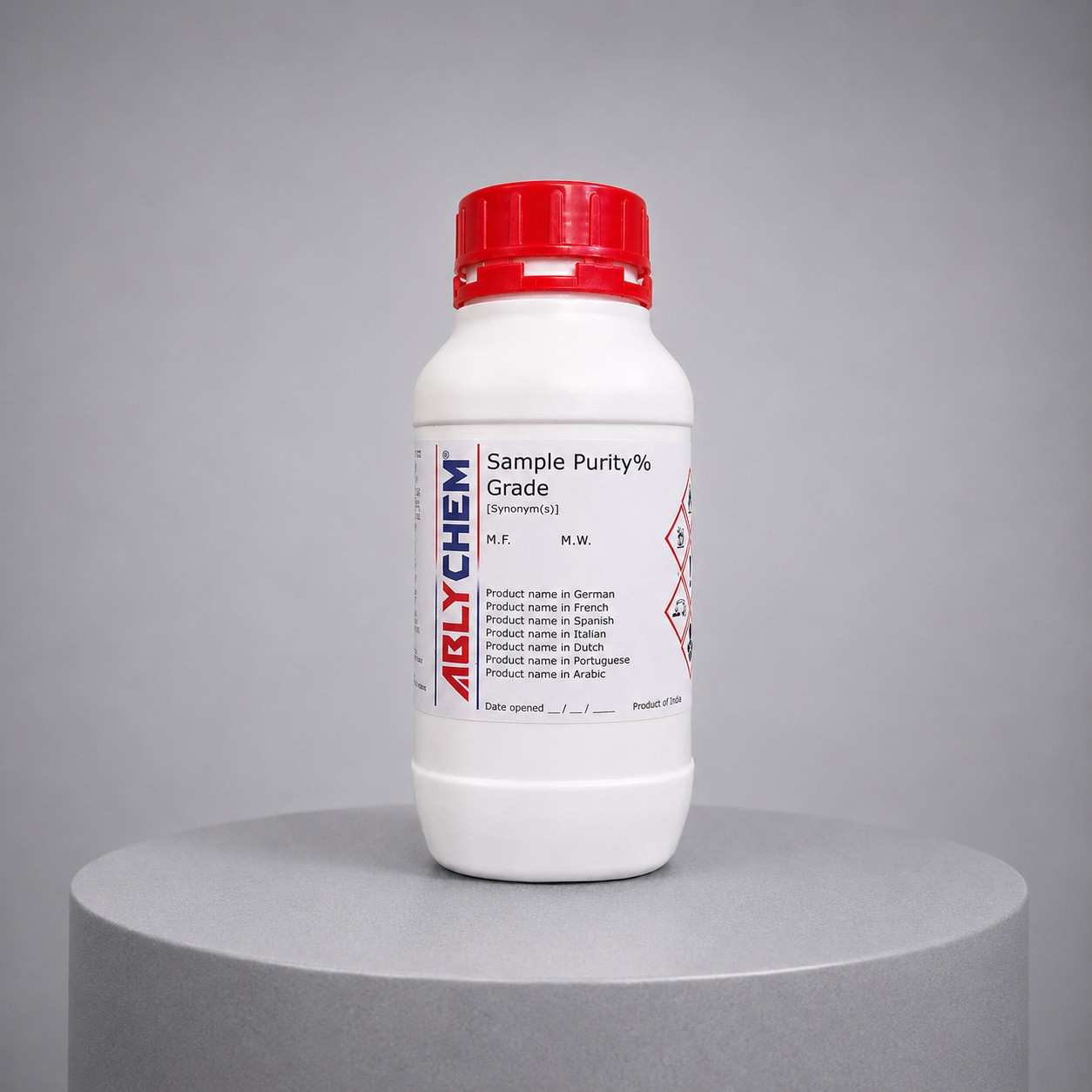
Basic information about this product
Safety and hazard classification
 GHS07
GHS07
Important safety instructions and precautions
Signal Word: Warning
Hazardous Statement: H302
Precaution Statement: P264 - P270 - P301 + P312 + P330 - P501
Detailed information about the product
Product Overview
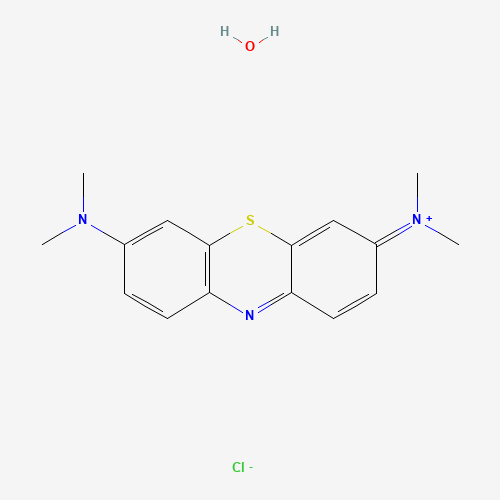
Methylene Blue Hydrate 82% For Microscopy (CAS No. 122965-43-9) is the hydrated form of the cationic phenothiazinium dye methylene blue, recognised as Basic Blue 9. The CAS identity represents a hydrated material rather than requiring one fixed stoichiometric hydration number, so the product is treated as methylene blue x-hydrate without assigning a monohydrate or other exact hydrate unless established by specification.
The Microscopy grade is intended for biological staining where the strongly coloured cationic dye provides contrast to cellular and microbial structures. It is useful in simple bacterial staining, morphology studies and selected histological or cytological preparations. The stated 82% dye content supports all the microscopical techniques that involve Methylene Blue.
Typical Applications
Common Synonyms
Storage Conditions
Keep tightly closed and protect from direct light, excessive heat, moisture exchange and contamination. Preserve clean handling conditions so that dye composition, hydration state and staining response remain reproducible.