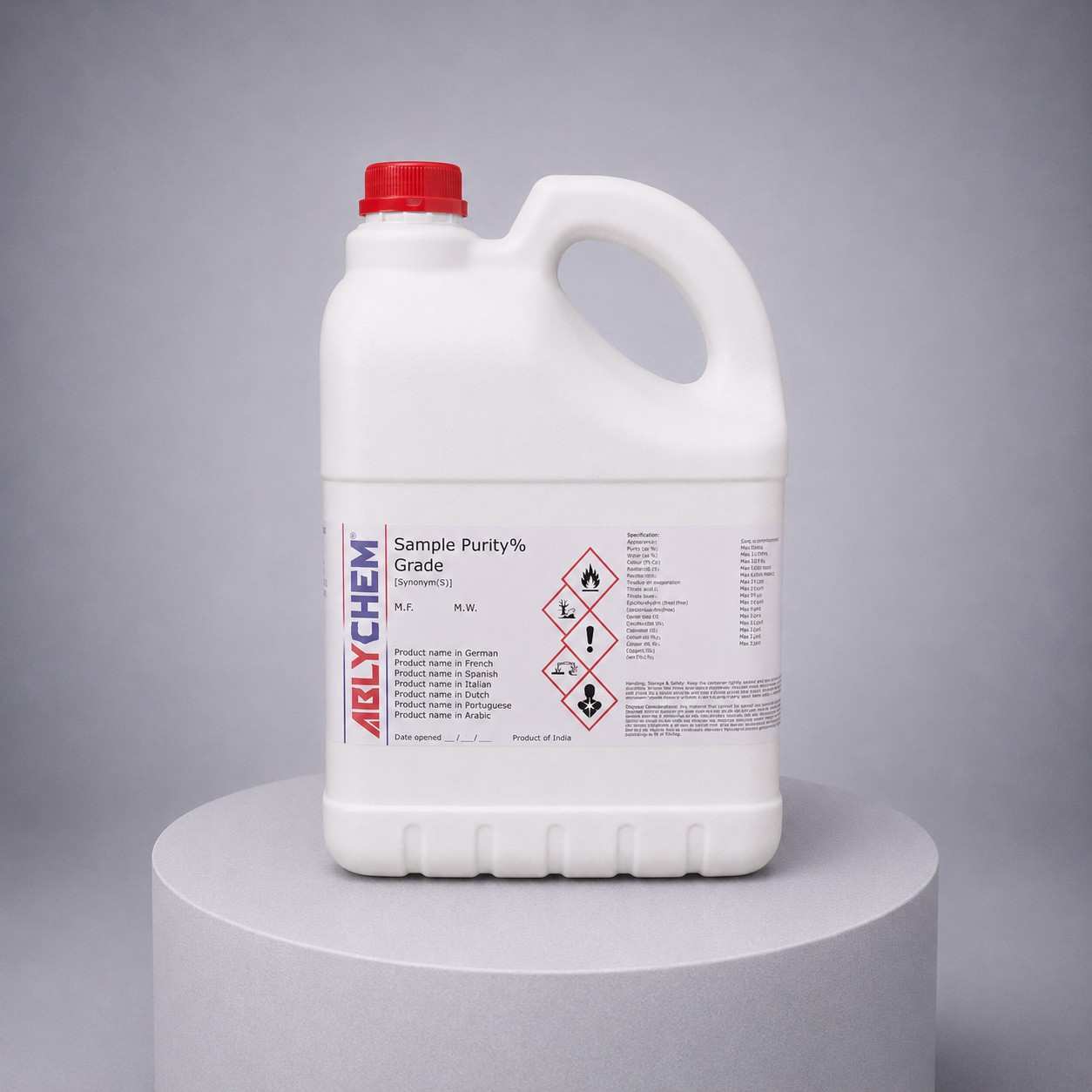
Basic information about this product
Safety and hazard classification
 GHS02
GHS02
 GHS07
GHS07
Important safety instructions and precautions
Signal Word: Danger
UN No.: 1219
IMCO Class No.: 3
Packing Group: II
Hazardous Statement: H225-H319-H336
Precaution Statement: P210-P261-P305 + P351 + P338
Detailed information about the product
Product Overview
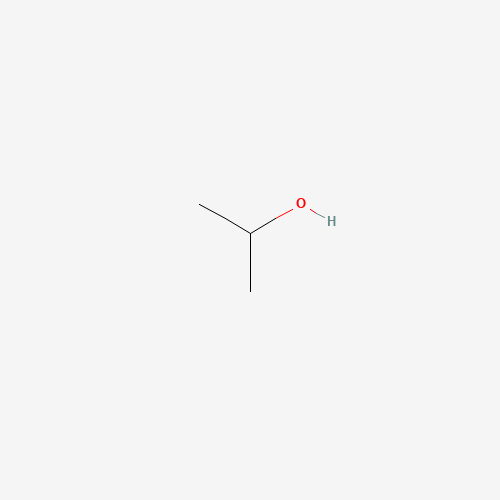
iso-Propyl Alcohol 99% For Synthesis (CAS No. 67-63-0) is the secondary three-carbon alcohol 2-propanol, in which the hydroxyl-bearing carbon is bonded to two methyl groups. This secondary-alcohol structure distinguishes its reaction behaviour from 1-propanol and enables oxidation to acetone, ester formation, alkoxide generation and participation in hydrogen-transfer chemistry under suitable catalytic conditions. Its polarity and broad solvent compatibility also make it useful as a preparative reaction medium.
The Synthesis grade is intended for organic synthesis, solvent use, crystallisation and preparation of isopropyl derivatives. It may act as either a reagent or a protic reaction solvent depending on the transformation.
Typical Applications
Common Synonyms
Storage Conditions
Store tightly closed to minimise evaporation, moisture uptake and prolonged exposure to air. Because isopropanol can form peroxides during extended contact with oxygen, preserve aged material from conditions that promote peroxide accumulation or concentration.