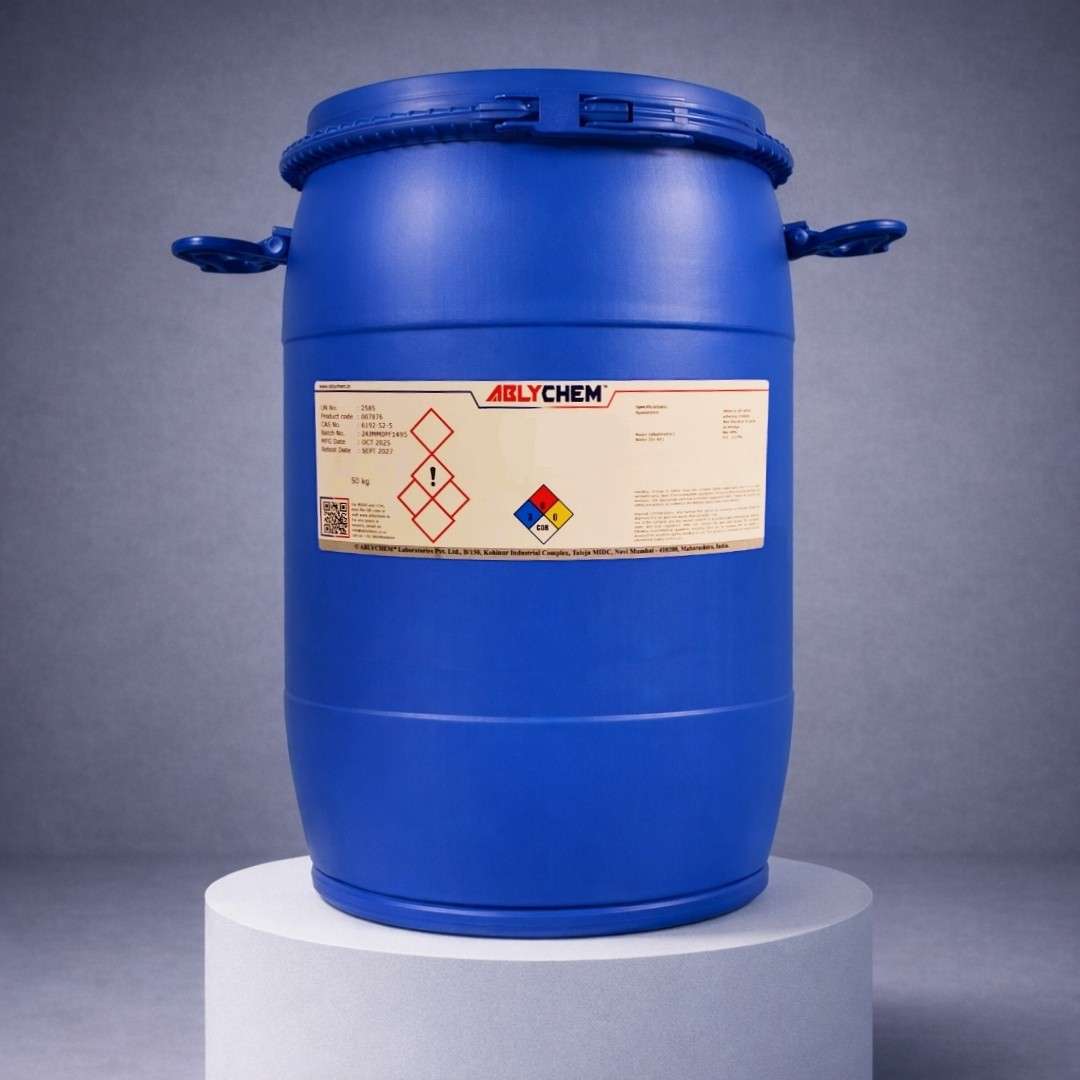
Basic information about this product
Safety and hazard classification
 GHS07
GHS07
Important safety instructions and precautions
Signal Word: Warning
Hazardous Statement: H319
Precaution Statement: P305 + P351 + P338
Detailed information about the product
Product Overview
Citric Acid Anhydrous 99.5% AR (CAS No. 77-92-9) is an analytical-reagent form of water-free citric acid. Its triprotic acid behaviour permits preparation of citrate-buffer systems across method-appropriate conditions, while its multiple oxygen-donor sites provide complexing and masking action toward selected metal ions.
The AR grade is intended for conventional analytical chemistry, preparation of citrate reagents and laboratory quality-control procedures. It supports acid–base, complexation, masking and solution-conditioning, and many more analytical methods used in critical analysis in regular and QC laboratories.
Typical Applications
Common Synonyms
Storage Conditions
Keep the container tightly closed under dry, clean conditions and protect from moisture, humid air and analytical contamination. Promptly reclose after sampling to preserve the anhydrous form and reagent cleanliness.